







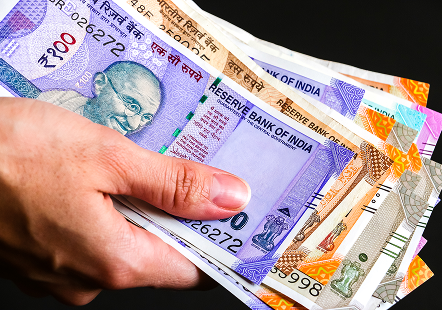
The best T20 teams don't slog from ball one. Neither should you.

A cricket match is a masterclass in financial planning. Here's what the IPL is quietly teaching us about money.

Every summer, the IPL takes over our screens  -  and honestly, our moods. With 1.37 billion digital viewers last season and IPL 2026 already in full swing, we are a nation of deeply, unapologetically obsessed fans.

But watch a match closely and something else emerges. A T20 innings isn't just entertainment  -  it's a surprisingly precise map of how your financial life should unfold.

Take PBKS chasing down 265 against DC  -  one of the great chases in IPL history. It wasn't just power hitting. It was timing, pacing, and knowing exactly when to accelerate. The batters who held their nerve in overs 7 to 15 made the fireworks in overs 16 to 20 possible.

THE T20 PLAYBOOK

A T20 innings has three phases. Each demands a completely different approach. Miss one, and the whole innings unravels.

Overs Phase What it demands
1-6
Powerplay
Go hard. Build momentum. Fielding restrictions mean the field is open - take full advantage.
7–15
Middle over
Stabilise. Rotate strike. Stay disciplined. This is where matches are quietly won or lost.
16–20
Death over
Accelerate. Finish strong. Protect what you've built - then unleash when it counts.

Matches aren't won in the last over alone. They're won by the decisions made in the first twelve.

Your financial life works exactly the same way. The decade in which you start, the years you quietly compound, the final stretch where you protect and draw  -  each phase has a different job. Play one wrong and you're scrambling at the end.

Trophy

YOUR FINANCIAL INNINGS

Play each phase like a pro. Three decades. Three mandates. One retirement.

Overs 1–6

Go hard, go early

Time is your unfair advantage. Use it.

Start SIPs immediately - even ₹5,000/month at 30 outperforms ₹20,000/month at 42. Compounding is the fielding restriction working in your favour.

Go equity-heavy (70–80%). You have a long runway to absorb market dips. Risk is a friend, not a threat, at this stage.

Buy term insurance now. Premiums are at their lowest, and your family needs protection while your wealth is still being built. Risk appetite: High - Equity focused

Overs 7–15

Steady, consistent, disciplined

Your earning power peaks. Deploy it wisely.

Rebalance to 50–60% equity. Introduce debt instruments - NPS, PPF, balanced funds - for stability. Don't chase returns here.

Increase SIP amounts as your income grows. You're at peak earning capacity - put it to work, not lifestyle inflation.

Prepay your home loan. Every EMI you clear before retirement means more corpus you can deploy freely when it matters. Risk appetite: Medium - Balanced portfolio

Overs 16–20

Protect, then draw smartly

Protect what you've built. Draw precisely.

Shift to 30–40% equity. Capital preservation now takes priority - a market slump at this stage hits differently than at 35.

Build your income plan - annuities, SWPs, rental income. Map every rupee's role in your retirement cashflow.

Get comprehensive health cover. Medical costs are the single biggest wealth destroyer in retirement. Don't underinsure here. Risk appetite: Low - Capital preservation

THE BOTTOM LINE

The players who win T20 matches aren't just the hardest hitters. They're the ones who follow a plan - who know when to push, when to consolidate, and when to go all out.

Good financial planning is never merely about chasing returns. It's about pacing your journey so your money shows up exactly when you need it most.

Warmly, Team PensionBazaar

Ready to plan your innings?

Simple, unbiased, spam-free retirement advice - tailored to the phase you're in right now.

No spam
No commission bias
Just honest guidance
article

12 May 2026

Tax Benefits on Health Insurance for Pensioners

Retirement often feels like a well-deserved break after decades of work. Th...

article

12 May 2026

NPS Investment Options: Understanding Auto Choice and Active Choice

If you are planning your retirement, you need to choose an investment strat...

article

12 May 2026

How Senior Citizens Can Save Tax Beyond 80C

Senior citizens can reduce their income tax liability by exploring tax savi...

article

12 May 2026

Corporate NPS Vs Individual NPS

Retirement planning in India was long seen as a privilege for government or...

article

11 May 2026

Best Investment Plan for Monthly Income in India

Everyone wishes to earn money even after they retire or stop working. Wheth...

article

11 May 2026

NPS Sanchay: A Simple Retirement Solution for India’s Informal Workforce

Retirement planning in India was long seen as a privilege for government or...

Wallet
Estimated breakdown of Monthly expenses

Feel free to adjust as you wish

Current household spend would be used to estimate the monthly expense post retirement..

Salary Slip

Children's education

Did you know that IIM Ahmedabad fees has increased from 15.5 L in 2015 to 27.5 L in 2025 - 5.4% annualised change!

We have assumed 6% increase in fees every year

Children's wedding

The big Fat Indian wedding is constantly evolving with newer themes and a shift towards more experiential weddings

We have assumed 10% increase in wedding expense every year

Travel the world

International getaways are getting common but they don't come cheap!

We have assumed 6% inflation rate on travel

House

Real estate has been a key interest area for many investors which has led to sharp rise in prices in the recent times

We have assumed 8% annual increase in real estate prices

Emergency funds

Cost of medical treatment and healthcare services is rising at a rapid pace with advancement in medical technology

We have assumed 12% annual increase for any medical emergencies

Others

Did you know a Honda city costed 8 Lakhs in 2002 is now priced at 18 L (~4% annualised change)!

We have assumed a 5% annual inflation on these spends, you may want to buy a new car or plan a holiday etc.

Balloons

Inflation is how prices of goods and services rise over time, meaning your money buys less than before. Simply put, things get more expensive each year

Change the inflation rate if you want
5 %
2% 8%

India's inflation trend for past few years

elephant image
These savings will become
On retirement @7% growth rate

/month invested for next years @12% CAGR would yield

Your current savings saved for next years @ % would yield

Your total corpus would be + =

Please share your details

in Years
India
+91

By clicking on "Submit" you agree to our Privacy Policy and Terms of use

Get Updates on WhatsApp