The Employee's Provident Fund (EPF) remains India's most trusted
retirement savings tool offering steady returns, tax benefits, and employer contributions.
Learn how EPF works, new 2025 withdrawal rules, and how to maximize its long-term benefits
for a secure retirement.
EPF: India's Trusted Retirement Savings Scheme
For most salaried Indians, the Employees' Provident Fund or EPF is where retirement planning
quietly begins. It's not a flashy investment, nor does it promise market-linked highs, but its
strength lies in something far more enduring: reliability. Established under the Employees'
Provident Fund & Miscellaneous Provisions Act, EPF has for decades served as India's most trusted
retirement savings vehicle blending steady compounding, tax benefits, and employer participation
into one disciplined structure.
According to EPFO data, over 6 crore salaried Indians actively contribute to EPF each month,
collectively managing one of the largest pension-linked pools in Asia. What makes it special is that
it enforces a habit that most people struggle to build voluntarily, consistent, long-term saving.
Each month's contribution may seem small, but over decades, it transforms into a meaningful corpus
that supports your post-retirement life.
How EPF Works: The Basic
Construct
The Employees' Provident Fund (EPF) isn't just one single scheme;
It's actually made up of three parts, each serving a different purpose.
The 1st component is the Provident Fund itself, which
helps you
build a retirement nest egg. This is the savings and wealth creation part of the scheme.
The 2nd component is the Employee Pension Scheme (EPS).
This is
designed to provide you with a steady pension once you turn 58, ensuring you have
financial support after retirement.
The 3rd component is the Employees' Deposit Linked Insurance
Scheme
(EDLI), which offers life insurance coverage to protect your loved ones in
case
something happens to you.
The best part?
You don't need to sign up for each of these
separately.
As soon as you're registered under EPF, you're automatically covered under EPS and
EDLI too.
Now, let's break down how each component of the
EPF contributes to your
salary.
At its core, the Employees' Provident Fund (EPF) is a structured savings plan where both you and your
employer contribute a fixed percentage of your salary every month. These contributions are mainly
invested in secure, government-backed instruments, which offer safety and stable long-term returns.
Each year, interest is added to your accumulated balance. The current rate is
around
8 to 8.25 percent p.a
While this rate might seem modest, the real magic lies in compounding. Over
time,
consistent
contributions and employer matching can lead to impressive growth. For instance, a 30-year-old who
contributes ₹10,000 a month (with an equal contribution from the employer) could build a retirement
corpus of about ₹80 - 90 lakh by age 60. To see how pushing your savings timeline back affects your ultimate
nest egg, check out the Cost of Delay
Calculator.
How an EPF Account is Created
For most salaried employees, starting an EPF account is effortless because it happens automatically.
When you join an eligible organization (typically one with 20 or more employees), your employer
registers you with the Employees' Provident Fund Organisation (EPFO). A unique Universal Account
Number
(UAN) is generated for you, and this number remains the same throughout your working life. Each new
employer simply links your UAN to their establishment's PF account, ensuring continuity as you
switch
jobs.
You can activate your UAN through the EPFO Member e-Sewa portal, which allows you to track your
contributions, interest earned, and total balance. This digital framework has made EPF management
transparent and easy to monitor - something earlier generations of employees never had.
Eligibility and Coverage
EPF coverage is wide and automatic. Any salaried employee working in an organization
registered under the EPFO and earning up to ₹15,000 per month is
mandatorily covered.
Those earning more can voluntarily opt in to continue the benefit.
Applicable to employees aged 18 to 58 years
Contributions are automatically deducted and credited to your EPF account
Your account remains portable across employers, ensuring continuity through job changes
This portability is one of EPF's most underrated advantages: it
allows uninterrupted corpus
growth through an entire career, regardless of how many times you switch jobs.
How to Transfer your EPF
when changing jobs
One of EPF's most valuable features is that it travels with you. Whenever you change jobs, your
savings don't remain stuck with your old employer they can be smoothly transferred to your new
account linked under the same UAN.
To transfer online, log in to the EPFO Member e-Sewa portal, go to
“Online
Services,” and
select “One Member - One EPF Account (Transfer Request).” You'll need to verify your
previous and current employer details, choose who will authenticate the transfer, and confirm via
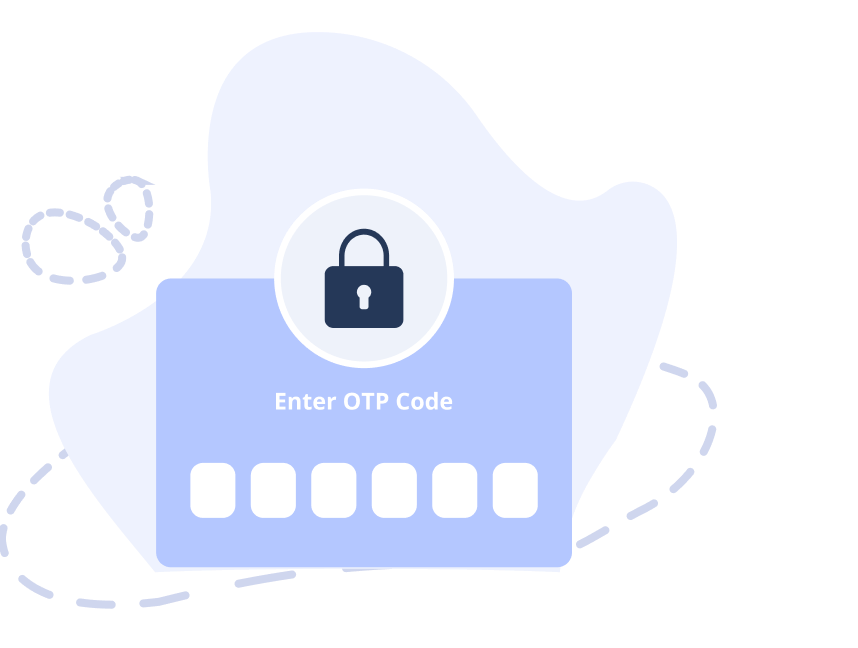
Aadhaar-based OTP. Once approved, the funds are electronically shifted to your new account.
This simple process keeps your entire EPF history consolidated under one number, ensuring
uninterrupted interest accrual and making future withdrawals hassle-free. If the online route
doesn't work, you can always use Form 13 for an offline transfer through your current employer.
Step 1 Check UAN Activation
Ensure your Universal Account Number (UAN) is active.
Verify that your KYC details are approved by your previous employer.
Step 2 Link Old & New PF Accounts
Your UAN remains the same across jobs.
When you join a new company, provide the same UAN.
The new employer will link your new PF account with your existing
UAN.
Step 3 Initiate online transfer request
Log in to the UAN Member Portal. Go to Online Services → One Member
- One EPF Account (Transfer Request)
Select the PF account from which you want to transfer (old
employer).
Choose either previous employer or present employer to attest the
transfer request.
Generally, choosing the current employer speeds up
approval.
Step 4 Submit transfer request
After submitting, an OTP is sent to your registered mobile (linked
with Aadhaar).
Authenticate with OTP to complete submission.
You will get a tracking ID to monitor progress.
Step 5 Employer verification request
The chosen employer (old or new) verifies your request digitally.
Once verified, EPFO starts processing the transfer.
Step 6 Transfer completion
EPFO moves your PF balance + service history from the old account to
the new one.
You can track the status under Track Claim Status in the portal.
After completion, you'll receive an SMS notification, and the
updated balance will reflect in the passbook.
EPF
Contributions and
Compounding
EPF thrives on a simple but powerful structure: shared responsibility and compounding growth.
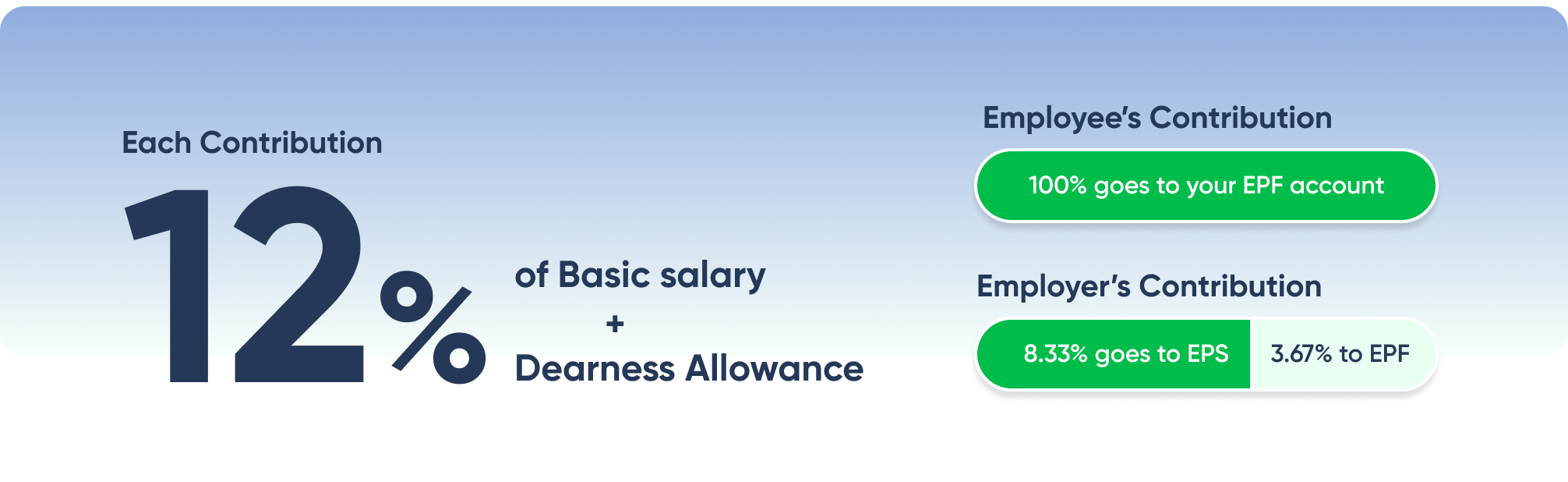
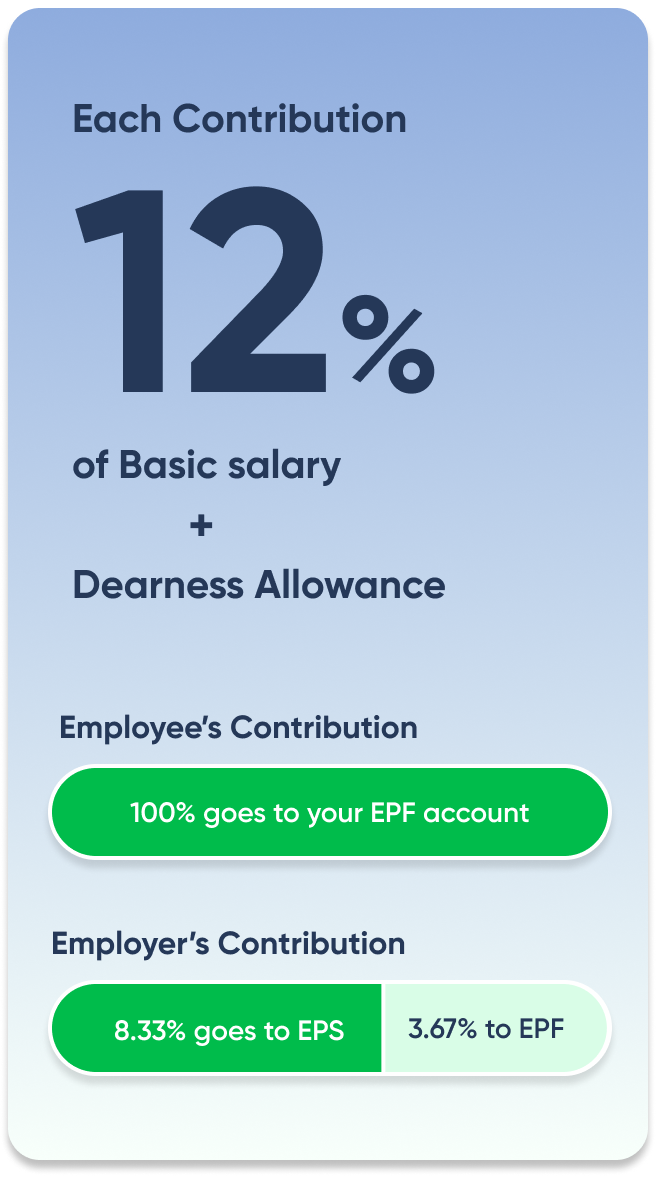
Employee contribution: 12% of basic salary + DA, deducted each month
Employer contribution: Another 12%, split between EPF and EPS
Interest compounding: Annual compounding ensures you earn returns on both principal and
accumulated interest
The effect of compounding
is best appreciated over long durations. Over a 25-30-year career, even
modest contributions can snowball into a corpus that provides real financial independence in
retirement.
Accessing Your EPF: Withdrawals and Flexibility
EPF balances are primarily meant for retirement, but they can also serve as a financial cushion
during your working life. The EPFO allows both partial and full withdrawals depending on your
situation.
Partial withdrawals can be made online through the Member e-Sewa portal for needs such as housing,
children's education, marriage, or medical emergencies. You'll need your Aadhaar, PAN, and bank
details linked to your UAN. Once you submit a claim, funds are usually credited within 10 - 15 working
days. For those preferring the traditional route, Form 31 can still be submitted offline through the
employer.
Full withdrawal is permitted after retirement at age 58 or after two months of unemployment. If
you've left your job but haven't withdrawn, your EPF account continues to earn interest for up to
three years, preserving your savings.
Withdrawals and
Flexibility
EPF may have started as a retirement fund, but it's evolved into something more practical for
today's workforce. Over the years, rules have been relaxed to help members access their savings
during key life moments without derailing their long-term goals.
You can make partial withdrawals for buying or building a home, children's education, marriage,
or medical emergencies. Full withdrawal is now allowed after 12 months of unemployment, and
pension withdrawals can be made after 36 months of leaving service. Even if your account becomes
inactive, it continues to earn interest.
The latest 2025 updates have made the process simpler and more flexible
The old 13 withdrawal clauses
are now grouped into three broad categories:
Essential needs
Housing
Special situations like job loss
You can now withdraw from both employee and employer contributions, not just your share.
For housing, up to 90% of the EPF balance can be used after just 3 years
of membership
(earlier it
was 5).
A minimum 25% balance must stay invested to protect your retirement
savings. Partial
withdrawals can be made after just 1 year of service in many cases.
These changes recognise that financial needs don't always wait until retirement; they make EPF more
responsive to real life while still keeping its core purpose intact: long-term financial security.
Why EPF still matters
EPF may not be the most glamorous investment, but it remains unmatched in stability, predictability, and
long-term reward for disciplined saving. In an era of volatile markets, it continues to serve as the
bedrock of retirement planning for millions
FeatureWhy It Matters
Compulsory contributionsEnsures regular saving, even if you're not naturally disciplined
Employer contributionDoubles your savings pace without extra effort
Government - backedVirtually no default risk
Tax benefits under 80CReduces taxable income while building wealth. EEE category
Partial withdrawalsOffers flexibility for key life milestones
In essence, EPF acts as the “non-negotiable” foundation of any salaried professional's financial plan,
something you can rely on even if other investments fluctuate.
EPF vs Other Retirement Instruments
To understand EPF's relevance, it helps to compare it with other retirement options in terms of return
stability, liquidity, and tax treatment.
NPS9-12%Triple Tax benefitLocked till age 60 or 15 years tenure0.01-0.30%
Mutual Funds (ELSS)10-15%80C (upto 1.5 lakhs)
on investment in ELSS onlyAnytime1-2%
Fixed Deposits6-7%80C upto 1.5 lakhsLimitedNil
While EPF's returns may appear modest compared to market-linked instruments, its predictability and
safety make it a cornerstone of a balanced retirement portfolio.
How to Maximize EPF Benefits
To make EPF work harder for you, consistency and strategy matter more than timing or tinkering.
Maximize your contributions - Stick to the full 12%
contribution; avoid
voluntary
reductions
Encourage employer compliance - Ensure your employer
contributes regularly and
correctly
Monitor your account - Use the EPFO portal to check
balances, interest credits, and
withdrawals
Plan partial withdrawals carefully - Use only for
key life
events, not for short-term
liquidity
Combine with NPS or PPF - Diversify your retirement
plan for better
inflation-adjusted returns
Preserve continuity - When changing jobs, always
transfer your EPF to avoid
breaking
the compounding cycle
EPF isn't just a savings product; it's a social safety net built into India's salaried economy.
It
supports over 6 crore members, collectively holding more than ₹18 lakh crore in assets making it one of the largest
retirement
systems in the world. For most employees, it represents the one
financial habit that never falters, even when life gets busy.
Average annual returns have consistently hovered between 8-8.5%,
comfortably beating inflation for
most of the past decade. More importantly, employer contributions can add 20-30% extra to your
corpus over your working life, a quiet but powerful accelerator of retirement wealth.
Key Takeaway
EPF continues to be one of India's most effective and time-tested retirement
instruments.
It rewards consistency, builds discipline, and offers the peace of mind that comes with
government-backed safety. In a financial landscape full of noise and volatility, it remains
refreshingly
simple to save regularly, stay invested, and let time and compounding do the rest.
Retirement is not the end of earning
- it's the beginning of living on your own terms
India is at a turning point. A growing middle class, longer lifespans, and rising aspirations mean
that how we plan for our later years has never mattered more. Yet most of us are underprepared.
PensionBazaar exists to close that gap - with clarity, simplicity, and the right plan for every
stage of life. Your future self deserves nothing less.





.png)

.png)

 Applicable to employees aged 18 to 58 years












 09 Sep 2026