What West Bengal just
reminded everyone
You must have heard many perspectives on West Bengal by now. Here is ours. Whether it is politics or investing, putting everything behind one outcome is risky.

Recently, India witnessed a moment that caught many by surprise. The West Bengal Assembly Elections 2026 delivered a decisive shift in power in a state that had seen nearly five decades of political continuity under just two dominant regimes.
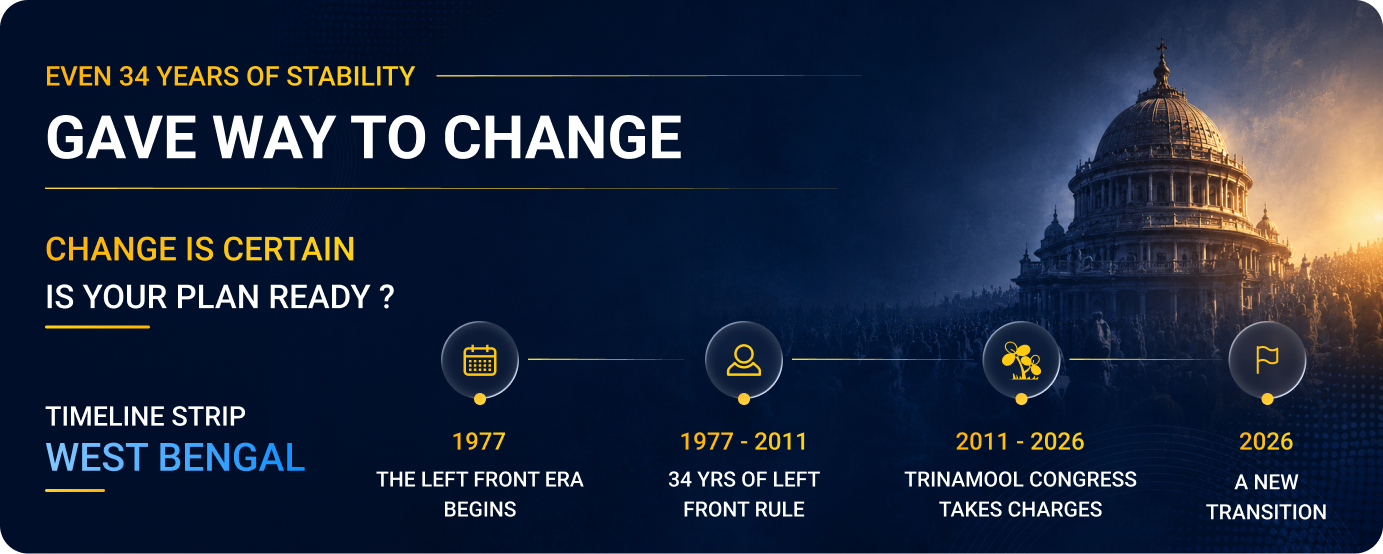
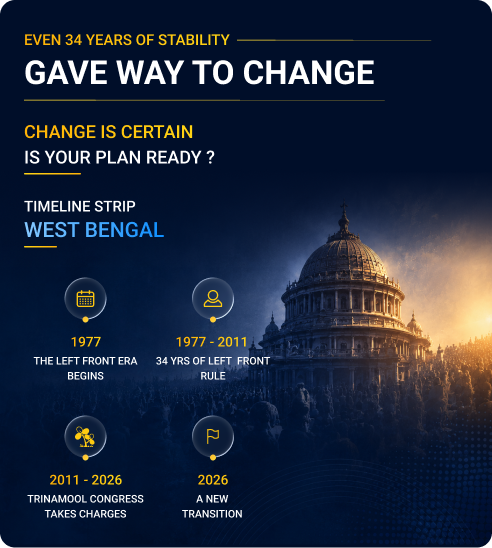
West Bengal’s political timeline itself tells an interesting story. The Left Front governed the state from 1977 to 2011 - a remarkable 34-year run that, at one point, felt almost immovable. Then came another major shift in 2011, when the Trinamool Congress under Mamata Banerjee came to power and continued governing for the next 15 years, until the 2026 elections brought yet another transition. In many ways, it is a reminder that even the longest phases of stability eventually give way to change.
We often carry the same assumption into our financial lives. We believe income will remain steady, markets will behave predictably, and long-term plans will unfold in a straight line. Most of the time, they do – until something shifts unexpectedly.
That is why strong financial planning is not really about predicting the future perfectly. It is about preparing for uncertainty. Especially when it comes to retirement planning, where your financial journey stretches across decades, through changing governments, economic cycles, inflation, market volatility, and personal milestones.
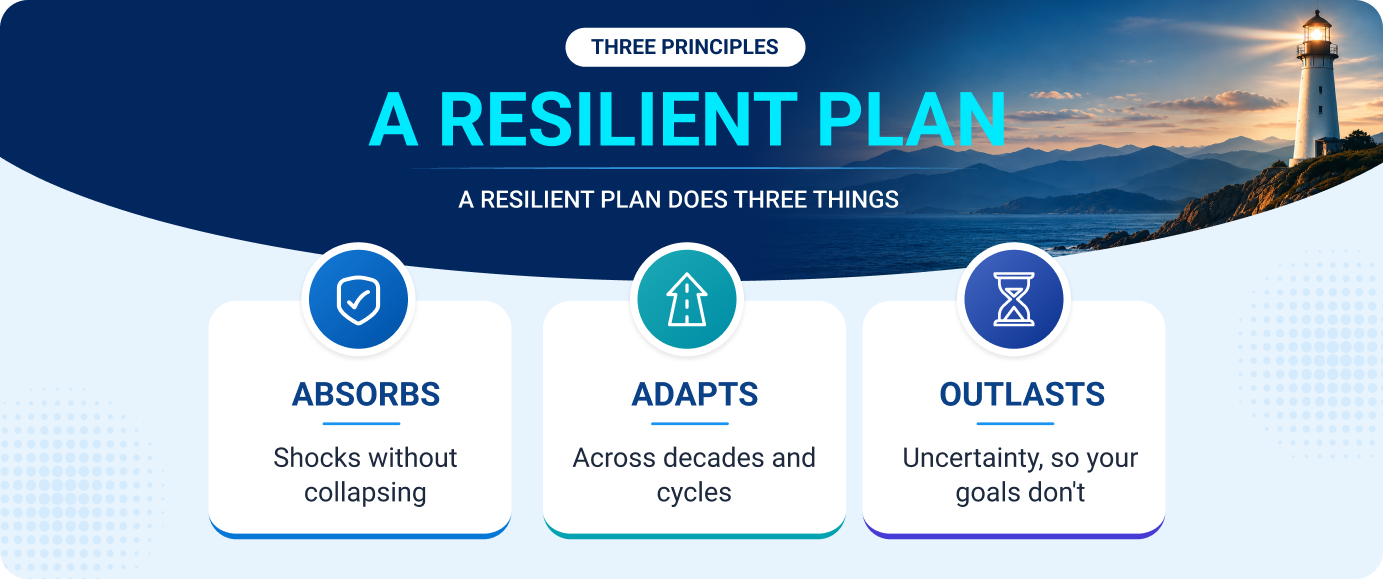
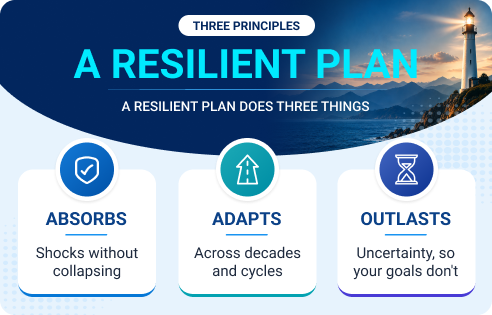
The idea stays the same. But the mix needs to change. Which is why diversification is less about “what all you’ve invested in” and more about “how your investments behave together.”It’s worth asking yourself: if markets get unpredictable tomorrow, is your portfolio designed to absorb that-or amplify it.
If you are looking for a complimentary wealth creation and management plan customized to your needs, you might want to consider PensionBazaar. This new initiative by PaisaBazaar is designed to help you compare and understand all govt investment schemes transparently - and help you make informed decisions.
Download our latest app
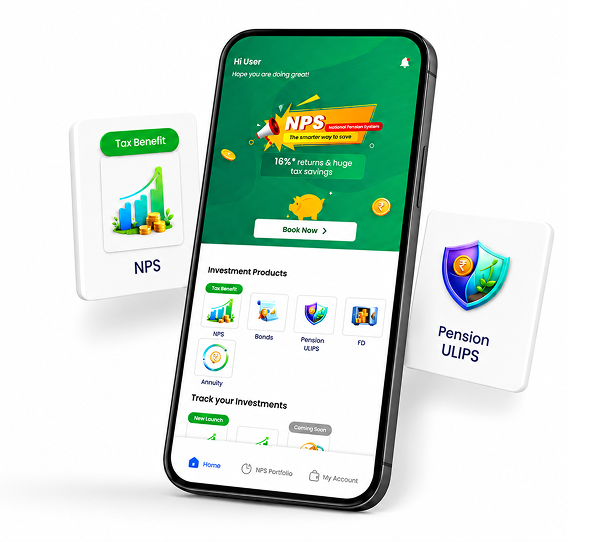
Retirement planning, simplified. The PensionBazaar app compares plans, gives smart recommendations, and lets you buy and manage everything on the go — no paperwork, no hassle.
Your future self will thank you.
Download from: