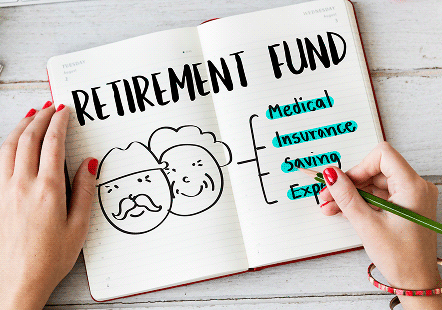
The 2026 EPF 3.0 framework transforms the provident fund into a dynamic financial safety net. By consolidating 13 withdrawal categories into 5 streamlined groups and introducing a uniform 12-month service rule, the EPFO has significantly boosted liquidity for employees. While members can now access up to 75% of their total balance for milestones like housing or medical emergencies, a crucial 25% remains "ring-fenced" to protect long-term compounding. This digital-first approach simplifies claims, ensuring that while you navigate today’s milestones, your retirement foundation stays rock-solid.
Three Schemes, One Registration
EPF + EPS pension + EDLI life cover. You're auto-enrolled in all three.
New 2025 Withdrawal Rules
13 clauses cut to 3 categories. Up to 90% for housing after just 3 years.
6 Crore Members, ₹18 Lakh Crore
One of the largest retirement systems in the world.
Employer Adds 20-30% to Your Corpus
Their 12% match compounds alongside yours for your whole career.
For the modern Indian professional, the Employee Provident Fund (EPF) has long been the silent engine of financial security. It is more than just a line item on a salary slip; it is a primary financial cushion for life’s major milestones. Be it buying a home, funding a child’s education, or weathering a sudden medical storm.
However, for years, the "PF withdrawal" process was shrouded in complexity, leaving many to
discover eligibility rules only after a claim rejection. In 2026, we find ourselves in the era of EPF 3.0. This
overhaul by the Employees' Provident Fund Organisation (EPFO) has transitioned the system from a rigid, opaque
savings pool into a responsive, digital-first financial safety net.
This comprehensive guide merges all previous frameworks with the latest 2026 updates, providing a
deep dive into how you can manage, access, and protect your corpus.
What is EPF 3.0? The New Philosophy of Savings
The EPF is a mandatory savings scheme overseen by the EPFO. Traditionally, both the employer
and the employee
contribute a portion of the monthly salary toward a long-term retirement corpus. Under the old system,
withdrawals were governed by 13 different, often confusing, categories with varying service requirements.
EPF 3.0 simplifies this by focusing on three core pillars:
Simplification: Consolidating 13 categories into 5 broad, logical groups.
Liquidity: Increasing immediate access to funds for early-career professionals.
Protection: Implementing "ring-fencing" to ensure the retirement base remains intact despite partial
withdrawals.
The Uniform 12-Month Rule
Perhaps the most significant change in 2026 is the Uniform Minimum Service Period.
Historically, you might
have needed 5 years of service for a house or 7 years for a wedding. Now, a standard 12-month minimum
service period applies to most partial withdrawals. This is a game-changer for early-career professionals
and those who switch jobs frequently, offering financial liquidity much earlier in their professional
journey.
Old Rules vs. New Rules (The 2026 Comparison)
To understand the current landscape, it is helpful to look at how the framework has evolved.
Feature
Earlier PF Rules
New PF Rules (EPF 3.0 - 2026)
Withdrawal Categories
13 separate, specific categories
5 broad, consolidated categories
Minimum Service Period
2 to 7 years (depended on purpose)
12 months (Uniform for most)
Withdrawable Amount
Primarily employee contribution
Employee + Employer + Accrued Interest
Partial Withdrawal Limit
50%-100% (of employee share only)
Up to 75% of total eligible balance
Retirement Protection
No formal safeguard
~25% balance "ring-fenced"
Processing Time
Often 15-30 days
Digital-first, near-instant approval
Types of EPF Withdrawals Allowed
EPFO categorises withdrawals into three primary types based on the member's status and need:
Final Settlement (Full Withdrawal)
This is the "exit" withdrawal. It is allowed when a member permanently retires or
leaves the workforce.
Retirement: 100% withdrawal is permitted at age 58 or above
Permanent Migration: If you are moving abroad for employment or permanent settlement, you can
close
your
account and take the full balance
Permanent Disability: In cases of total and permanent incapacitation, members can withdraw the
entire
corpus immediately
Partial Withdrawal (Advances)
These are "in-service" withdrawals that allow you to tap into your savings for
specific life events
without
closing your account. Under EPF 3.0, these are faster and cover a larger portion of your balance (up
to
75%).
Pension Withdrawal Benefit (EPS Component)
The Employees' Pension Scheme (EPS) is the "other half" of your PF account. The rules
for this are
distinct:
Under 10 Years of Service: You can withdraw the EPS portion as a lump sum.
Over 10 Years of Service: You are no longer eligible for a lump-sum withdrawal. Instead, you
become
eligible for a monthly pension upon retirement.
Deep Dive into Partial Withdrawal Rules
The 2026 rules allow members to access their funds for the following reasons, provided they
meet the
12-month
service threshold:
Medical Emergencies
This remains the most critical category.
Eligibility: Self, spouse, children, or parents
Limit: Up to 6 months of basic salary plus DA, or the total employee contribution (whichever is
lower)
EPF 3.0 Update: There is no longer a strict "waiting period" for life-threatening illnesses;
liquidity
is prioritised.
Marriage and Education
A major milestone category that previously required 7 years of service.
Eligibility: Marriage of self, daughter, son, brother, or sister. Post-matriculation education
for
children or self.
Limit: Up to 50% of the employee"s contribution.
Frequency: Under EPF 3.0, these can be accessed multiple times, subject to frequency caps within
a
financial year.
Housing and Real Estate
Housing remains the largest reason for partial withdrawals.
Purchase or Construction: After 5 years of service, members can withdraw up to 36 months of
basic
salary.
Loan Repayment: Requires 10 years of service; members can withdraw up to 90% of the total
balance to
pay
off a home loan.
Renovation: Allowed after 5 years of ownership, capped at 12 months' salary.
Special/Emergency Situations
EPF 3.0 introduced a "No-Reason" withdrawal for small amounts during financial
distress,
provided the
member
has completed 12 months of service. This is designed to replace high-interest personal loans during
short-term cash crunches.
Understanding "Eligible PF Balance" and the 25% Rule
One of the most technical shifts in 2026 is the definition of Eligible PF Balance.
Previously, you could mostly only touch your own contribution. Now, for many purposes, you
can access up
to
75% of your total balance (Your contribution + Employer's contribution + Interest on both). However, to
ensure you don't reach retirement with an empty account, the EPFO has introduced Ring-Fencing.
The 25% Rule: Approximately 25% of your total balance is effectively "locked." This portion
continues to
earn
interest (currently at a robust 8.25%) and cannot be withdrawn via partial advances. This ensures that
even
if you take multiple advances for a wedding or a house, you still have a foundational corpus waiting for
you
at age 58.
EPF Withdrawal in Case of Job Loss
Losing a job is a high-stress event, and the EPF 3.0 rules have been refined to act as a
bridge:
After 1 Month of Unemployment: You can withdraw up to 75% of your total balance to manage your
immediate
living expenses.
After 2 Months (or up to 12 months under specific long-term rules): You can withdraw the remaining
25%
if you have not joined a new firm.
This staged withdrawal encourages members to keep a portion of their savings intact if they
find a new
job
within a few months, allowing the account to remain active and transferrable.
Tax Implications of EPF Withdrawal
While the EPF is an E-E-E (Exempt-Exempt-Exempt) scheme, that status depends on the 5-Year
Rule:
After 5 Years of Continuous Service: All withdrawals (both principal and interest) are completely
tax-free.
Before 5 Years of Service: Withdrawals are generally taxable as income in the year of receipt. The
employer's contribution and the interest earned will be added to your taxable income.
TDS (Tax Deducted at Source): If you withdraw more than ₹50,000 before 5 years, TDS at 10% is
applicable
(if PAN is provided). If PAN is not linked, TDS can jump to the maximum marginal rate.
Exceptions: Tax is not deducted if service is terminated due to ill health, business closure,
or other
reasons beyond the employee's control.
The Digital Claim Process (How to Apply Online)
In 2026, the EPFO has virtually eliminated the need for physical paperwork. If your KYC is
updated, you
do
not even need your employer's signature for most claims.
Step-by-Step Online Application:
Log In: Access the UAN Member Portal using your Universal Account Number and password.
Check KYC: Navigate to the 'Manage' tab and select 'KYC'. Ensure your Aadhaar, PAN, and Bank Account
(with IFSC) are "Seeded" and "Verified."
The transition to EPF 3.0 represents a milestone in Indian financial policy. By reducing the
13 complex
categories into 5 broad ones and implementing the 12-month uniform service rule, the EPFO has made your
money significantly more accessible. The shift toward a digital-first, Aadhaar-authenticated process has
reduced settlement timelines from weeks to mere days.
However, the ease of withdrawal comes with a responsibility. The EPF is a "forced" savings
mechanism
designed
to benefit from the power of compounding over decades. While the 25% ring-fencing rule provides a safety
net, every partial withdrawal reduces the final corpus you will rely on in your 60s.
In 2026, the strategy for the smart professional is clear: Use the EPF as a financial safety
net for true
emergencies and major milestones, but let the remaining balance grow undisturbed. Treat it as your
"silent
partner" in retirement, ensuring that while you live well today, you are also building a stable,
inflation-proof base for tomorrow.
FAQs
Q. Can I withdraw my PF while I am still employed?
Yes. Under EPF 3.0, you can take Partial Advances for reasons like medical emergencies, home purchase, or education after completing 12 months of service.
Q. Is there a way to withdraw my PF without my employer's signature?
Yes. If your KYC (Aadhaar, PAN, and Bank) is seeded and verified on the UAN portal, you can submit an online claim directly. The system uses Aadhaar OTP for authentication, bypassing the need for physical employer approval.
Q. What is the maximum amount I can withdraw as an advance?
Generally, you can withdraw up to 75% of your total eligible PF balance (Employee + Employer + Interest). However, about 25% of your balance is ring-fenced for retirement security.
Q. How long do I have to be unemployed to withdraw my full PF?
You can withdraw 75% of your balance after 1 month of unemployment. If you remain unemployed for a total of 2 months, you can settle the remaining 25% and close the account.
Q. Are PF withdrawals taxable in 2026?
If you have completed 5 years of continuous service, the withdrawal is completely tax-free. If you withdraw before 5 years, the amount is added to your taxable income, and TDS may apply.
Q. Can I withdraw my pension (EPS) money along with my PF?
If you have less than 10 years of service, you can withdraw your EPS amount. If you have completed 10 years or more, the money stays in the system to provide you with a monthly pension after age 58.
Q. Can I withdraw PF for a medical emergency for my parents?
Yes. Medical withdrawals are permitted for the treatment of self, spouse, children, and dependent parents. Under the new rules, these are accessible with no minimum service period for major illnesses.
Q. What happens to my EPF if I don't withdraw it after leaving a job?
The account remains active and continues to earn interest. However, if no contributions are made for a very long period (and you have reached retirement age), it may eventually be classified as an Inoperative Account, though it still earns interest for a specific duration. It is always better to transfer it to your new employer's UAN.







 05 Oct 2026