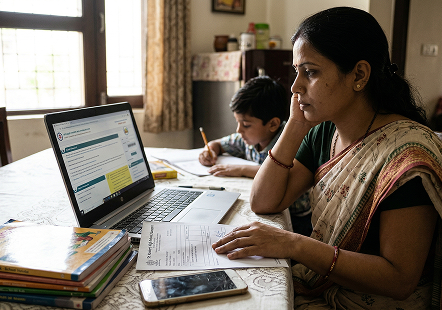
What is Family Pension? Eligibility, Types, and Benefits
Family pension is a government-backed financial support system designed to provide stability to dependents after the death of a pensioner. The scheme allows eligible family members, primarily spouses and children, to receive pension benefits based on the pensioner’s last drawn salary and service conditions. Eligibility, tenure, and payment structure vary depending on the applicable pension scheme and government rules. Survivor pension benefits can support families during financial emergencies and periods of hardship. To claim family pension benefits, applicants are generally required to submit documents such as the pensioner’s death certificate, identity proof, and valid bank account details.
It is a hard and challenging period for the members of the family
when one of their primary earning members passes away. In such a scenario, having a regular
source of income can make a world of difference. This is where the concept of family pension
becomes important, ensuring that the dependents of the employee receive financial support even
after the employee's demise.
Employees in government services and those covered under statutory schemes such as the Employees'
Pension Scheme (EPS) can provide their dependents with family pension benefits. In the private sector, such
benefits depend on whether the employer is covered under EPS or offers a separate pension scheme. In this
article, we will learn more about what a family pension is, how it works, its eligibility criteria, its various
types, and its advantages to the members of the family.
Understanding Family Pension
Before diving into the rules and types, it is important to clearly understand what a family
pension is and how it works within a retirement or pension scheme.
A family pension is a regular payment made to the family members of a deceased employee who
was eligible for a pension. It is designed to support the spouse, children, or other dependents after the
death of the pension holder.
This type of survivor pension ensures that the family does not suddenly lose financial
security when the primary pension recipient passes away.
Key Characteristics of Family Pension
The provisions of family pension are governed by official family pension rules, which vary
depending on the employment sector. It generally includes the following features:
Paid to the spouse or dependents of a deceased pensioner
Continues for a specified period or lifetime, depending on the rules
Amount usually calculated as a percentage of the employee's pension
Provided under a government or employer pension scheme
Helps maintain basic financial stability for dependents
Who Is Eligible for Family Pension?
Eligibility for family pension depends on the type of employment, the pension scheme, and the
relationship of the beneficiary with the deceased employee.
However, most family pension rules in India follow a similar structure. Generally, the
following individuals may be eligible for dependent pension benefits:
Spouse of the deceased employee or pensioner
Unmarried or dependent children
Disabled children who remain financially dependent
In certain cases, dependent parents
Widowed or divorced daughters under specific conditions
For example:
Under the Employees' Pension Scheme (EPS), the spouse and children of the employee may
receive survivor pension benefits after the employee's death. Eligibility also depends on whether the
employee has completed the minimum qualifying service, typically 10 years under the Employees' Pension
Scheme (EPS).
Types of Family Pension
Different types of family pension exist depending on the beneficiary and the conditions of
payment. Understanding these categories helps families know what benefits they may receive.
Spouse Pension
The most common type of family pension is provided to the surviving spouse of the
deceased employee or pensioner. This type of survivor pension ensures the spouse continues to
receive financial support.
Key features include:
Paid to the husband or wife of the deceased pensioner
Continues until remarriage in some cases (Subjected to changing rules)
Usually, a percentage of the original pension
Paid monthly under applicable family pension rules
Child Pension
If the spouse is deceased or certain conditions apply, the pension may be extended to
children. This dependent pension helps cover education and living expenses for children.
Under many pension scheme structures:
Children receive a percentage of the family pension
Paid until a specific age (upto 25 years as per EPS)
A maximum of two children can receive it at a time
Orphan Pension
If both parents are deceased, eligible children may receive orphan pension. This type
of survivor pension ensures financial support for children who have lost both parents.
Key provisions include:
Higher percentage of the family pension amount
Provided to the surviving children
Usually continues until a specific age limit
Dependent Parent Pension
In certain cases, dependent parents may be eligible for a family pension if there are
no other eligible family members. Not all pension schemes offer this benefit, but some government
structures do.
Eligibility depends on:
Proof of financial dependency
Absence of spouse or children
Compliance with applicable family pension rules
How Family Pension Is Calculated
The amount of family pension varies depending on the employee's salary, service period, and
the rules of the applicable pension scheme. Generally, family pension rules determine the amount as a
percentage of the pension or the last drawn salary. Common calculation methods include:
Around 30% of the last drawn salary (in some government pensions)
Percentage of pension already being received
Fixed amount determined by the pension scheme
For example:
Under many government pension systems, the spouse may receive about 30% of the last basic
salary as a family pension. In the EPS, the survivor pension depends on the pensionable salary and service
years of the employee.
Benefits of Family Pension
A family pension offers significant financial protection to dependents. It ensures the family
does not face sudden financial instability after losing the primary earner.
Some of the major benefits include:
Provides regular monthly income
Ensures financial stability for dependents
Helps manage daily living expenses
Supports children's education
Reduces financial stress after the employee's death
In addition, many pension scheme structures include provisions for inflation adjustments and
other benefits. For families without other income sources, a dependent pension becomes a critical support
system.
Documents Required to Claim Family Pension
To receive a family pension, eligible beneficiaries must submit certain documents to the
pension authority or employer. These documents help authorities verify eligibility according to official
family pension rules.
Typically required documents include:
Death certificate of the employee or pensioner
Pension Payment Order (PPO)
Identity proof of the claimant
Bank account details
Relationship proof with the deceased employee
Application form for family pension
How to Apply for Family Pension
Applying for a family pension involves a formal process through the pension authority,
employer, or government department managing the pension scheme.
The typical process includes the following steps:
Inform the employer or pension office about the death of the pensioner
Obtain the family pension application form
Submit the required documents, such as the death certificate and identity proof
Provide bank details for pension transfer
Wait for verification and approval
Once approved, the survivor pension is credited regularly to the beneficiary's bank account.
Processing time may vary depending on the organisation and documentation.
Taxation of Family Pension
Another important aspect to understand when learning what a family pension is - its tax
treatment. In India, family pension is taxable under the category of "Income from Other Sources." The tax
benefit of a family pension reduces the taxable portion of the dependent pension income.
However, beneficiaries receive certain tax deductions. The Income Tax Act allows a standard
deduction on family pension of:
₹15,000 per year OR
One-third of the pension is received
Whichever amount is lower
Common Mistakes to Avoid
While claiming family pension, beneficiaries should avoid certain common errors that may
delay approval. Keeping pension records updated and maintaining documentation ensures a smoother claim
process.
Some common mistakes that individuals make while claiming family pension include:
Knowing what is family pension allows you to understand why it is important from a financial
and security perspective. Family pension is a safety mechanism that comes in handy in case of the death of a
pensioner, providing a constant flow of funds during difficult times. It can be in the form of a government
pension plan, a company plan, or a retirement plan.
With clear family pension rules, structured benefits, and reliable payment systems, this
survivor pension becomes a vital financial lifeline. Families should ensure proper documentation, update
nominee details regularly, and understand the provisions of their dependent pension benefits to avoid
complications in the future.
FAQs
Q. Who is eligible to receive a family pension?
Eligibility for family pension typically includes the spouse, dependent children,
and sometimes dependent parents of the deceased employee. The exact eligibility depends on the
family pension rules of the specific pension scheme.
Q. What happens if both parents pass away?
If both parents are deceased, eligible children may receive an orphan pension,
which is a type of dependent pension. The pension amount is often higher compared to the regular
child pension.
Q. Is family pension taxable in India?
Yes, family pension is taxable under the category “Income from Other Sources.”
However, beneficiaries can claim a deduction of up to ₹15,000 or one-third of the pension
received, whichever is lower.
Q. Can a divorced or widowed daughter receive a family pension?
Approval timelines depend on document verification and state processing systems.
Typically, it may take a few weeks to a few months after successful submission.
Q. Can a family pension be transferred to another family member?
Yes, if the primary beneficiary (such as the spouse) passes away or becomes
ineligible, the family pension may be transferred to the next eligible dependent according to
the pension scheme rules.




 01 Oct 2026