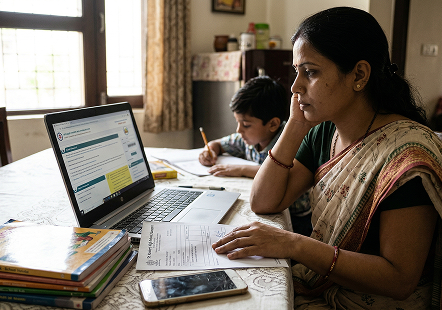
What is NPS Vatsalya BoB?
NPS Vatsalya is a pension scheme under the National Pension System (NPS) that is regulated by the
Pension Fund Regulatory and Development Authority (PFRDA). Bank of Baroda as an authorised Point of Presence
(PoP), facilitates the opening and servicing of NPS Vatsalya accounts for eligible subscribers. It allows
subscribers to invest in a mix of corporate bonds, equities and government securities. The scheme issues the
Permanent Retirement Account Number (PRAN) in the minor's name.
Features of NPS Vatsalya Bank of Baroda
NPS Vatsalya Bank of Baroda allows parents to start retirement planning for their child at an
early stage of life. The scheme provides a mix of flexible contributions with professionally managed
investments.
- Suitable for Minor Citizens: The scheme is for Indian minors below 18 years of age and
parents can manage this account till the child becomes an adult.
- Promotes Early Retirement Planning: The scheme encourages parents and legal guardians
to start retirement planning for their child at an early age. Early investments also give enough time to
grow money through compounding and also secure a future during retirement.
- Regulated by PFRDA: It is governed by PFRDA and Pension Fund Managers manage your
investments under a transparent regulatory framework.
- Permanent Retirement Account Number (PRAN): Once you register successfully then a PRAN
is allotted in the child's name. This unique number stays with the subscriber and helps to manage
pension investments seamlessly.
- Multiple Investment Options: Because it provides multiple ways to invest, it allows the
guardians to choose the right investment option as per their risk profiles. Guardians can either choose
an automatic asset allocation strategy, or they can manage the allocation across the eligible asset
classes.
- Transition After 18 Years: At age 18, the subscriber must submit fresh adult KYC and
select one of three paths: continue maintaining the fund under Vatsalya rules up to age 21, shift the
entire corpus into a regular NPS Tier-I account or exit to close the account entirely. Regarding fund
access, the scheme allows a maximum of two partial withdrawals before age 18 and two additional partial
withdrawals between ages 18 and 21. If no option is actively chosen by age 21, the fund does not simply
become a standard NPS account; the system triggers a forced auto-shift to a higher-equity scheme under
MSF, binding the money to adult PFRDA Exit Regulations.
Bank of Baroda NPS Vatsalya Eligibility Criteria
BoB follows the PFRDA's eligibility framework for NPS Vatsalya.
- Indian citizens including NRI/OCI minors, below 18 years of age are eligible to open an NPS Vatsalya
account.
- The account is opened in the minor's name while the parent or legal guardian opens and operates the
account until the child attains the age of majority.
- The minor remains the sole beneficiary of the account throughout the tenure.
Documents Required for Bank of Baroda NPS Vatsalya
The required documents to open the NPS Vatsalya account at Bank of Baroda are given below.
- Date of birth proof of the minor: Birth certificate, school leaving certificate, matriculation
certificate, PAN or passport.
- KYC of guardian: Adequate ID proof and address proof like Aadhaar, driving licence, passport, voter ID
card, NREGA job card, or National Population Register entry.
- Permanent Account Number (PAN) of the guardian or a Form 60 declaration (Rule 114B).
- For NRI/OCI applicants, details of the minor's NRE or NRO bank account (sole or joint) as applicable.
Contribution Rules
NPS Vatsalya scheme provides contribution flexibility and allows parents to invest as per
their financial capability.
| Contribution Type |
Amount |
| Minimum Contribution |
₹250 per year |
| Maximum Contribution |
There is no upper limit |
It allows parents to increase investment as their income grows and contribute more towards a
secure financial future for their children.
Investment Options Available
Parents and guardians have the choice to decide how the invested funds are allocated based on
their investment risk levels.
-
Default Choice
If you don't make an investment choice at account opening, your investment will be
automatically placed in the Moderate Life Cycle Fund (LC-50), under which you can invest up to 50%
of your
portfolio in equity and the remaining amount in relatively stable asset classes.
-
Auto Choice
Auto Choice is designed to adjust the asset allocation as per the subscriber's age.
Guardians
can choose between the three life cycle funds based on their risk tolerance.
| Life Cycle Fund |
Maximum Equity Allocation |
Suitable For |
| Aggressive (LC-75) |
Up to 75% |
Higher risk tolerance |
| Moderate (LC-50) |
Up to 50% |
Balanced investors |
| Conservative (LC-25) |
Up to 25% |
Lower risk preference |
-
Active Choice
In active choice, the contributions can be invested in the different asset classes
within
limits set by PFRDA. It is a suitable option for investors who want more control over their
portfolio
allocation.
| Asset Class |
Maximum Allocation |
| Equity |
Up to 75% |
| Corporate Debt |
Up to 100% |
| Government Securities |
Up to 100% |
| Alternative Assets |
Up to 5% |
Bank of Baroda's Fees and Charges for NPS Vatsalya
Bank of Baroda applies the same charge structure across the Common Schemes (All Citizen
Model), including NPS Vatsalya.
- One-time onboarding fees: ₹200 per new account (recovered by unit cancellation over 4 quarters).
- Reduced onboarding fees: ₹100 if subscriber is onboarded through a fully digital process.
- Annual fee: 0.20% per annum of the assets under management adjusted by the fund's Net Asset Value (NAV)
and paid to the bank quarterly.
- GST and other applicable taxes are charged extra, and a dormant account (an account without contribution
for four successive quarters) is not charged.
How to Apply for NPS Vatsalya BoB Account
The National Pension System (NPS) Account may be opened through a Bank of Baroda branch and
the eNPS Portal online.
Online Procedure (eNPS Portal)
- Go to the eNPS portal.
- Click on 'Register Now' (NPS Vatsalya).
- Enter the information required for the minor and a guardian.
- Select 'Applicant Type: NPS Vatsalya' to register correctly.
- Complete the KYC and make an initial contribution.
- PRAN is allotted in the name of the minor after registering successfully.
Offline Procedure Through Bank of Baroda
- Visit the nearest Bank of Baroda branch.
- Obtain and fill out the NPS Vatsalya Form.
- Submit it with KYC documents and initial contribution.
- If you need any help throughout the application process, you can contact the bank team and the
bank verifies the application and supporting documents.
- PRAN will be allotted for your child after successful verification.
Conclusion
NPS Vatsalya Bank of Baroda helps the parents to start the retirement planning for minors at
an early stage. It offers professionally managed portfolio options and flexible contributions and helps in
building a retirement corpus through long term compounding.
Before you register for the account, understand the scheme's market linked nature, long
investment horizon, charges, withdrawal rules and also eligibility conditions. You should also compare it
with other long term savings options such as PPF
and Sukanya Samriddhi
Yojana, so that you can determine if it aligns with your child's financial goals.




 05 Oct 2026