A Silent Retirement Crisis: 70% of India's Middle Class are Dependent on
Family
Over 70% of Indian seniors have no independent income, highlighting the urgent need
for middle-class households to prioritize long-term financial planning.
Peaceful Post-Retirement Life
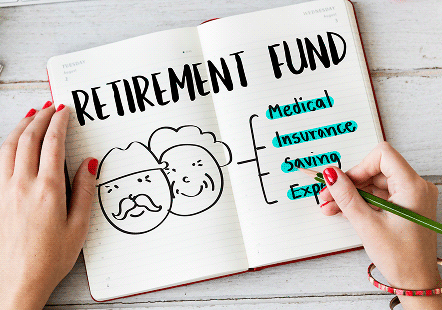
Build a secure corpus for a worry-free retirement.
Tax-Free Regular Income
Enjoy regular income with applicable tax benefits.
India is aging faster than we realise. The country that once prided itself on being "young" is slowly
but decisively shifting into a new demographic reality. According to the Longitudinal Ageing Study in India
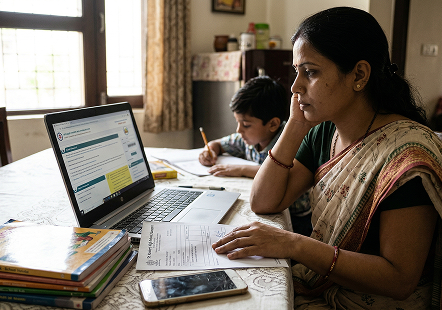
(LASI), over 70% of India's elderly depend on their children for financial support, and nearly one in five
seniors has no income of their own. These aren't just numbers; they are a glimpse into what our own old
age could look like if we don't act early.
The truth is uncomfortable: India's middle class, the backbone of the nation's economy, is heading
towards a retirement crisis. Rising longevity, shrinking families, informal employment, and low financial
literacy are creating a perfect storm. And unless the middle class rewires how it thinks about retirement,
tomorrow's elderly may be even more vulnerable than today's.
The Middle-Class Paradox: Earning More, Saving Less
On the surface, the middle class looks financially stable. Salaries have increased, lifestyles have improved,
and aspirations have grown with every decade. But beneath this upward mobility lies a troubling pattern:
retirement planning is still not a priority.
Most families still build their financial life around education, home loans, and short-term savings.
Retirement feels distant, something that "future me" will handle. Unlike Western economies,
where retirement investing starts with the first job, India's middle class often begins thinking about
old age only after major milestones : children's education, home buying, weddings have drained
financial bandwidth.
Add to this the cultural expectation that children will take care of parents, and you have a middle class
that continues to underinvest in retirement, assuming family structures will always remain the same.
But today's reality is different. Families are becoming smaller, migration is normal, and costs of
living, especially healthcare, are rising sharply. The systems that supported the previous generation simply
won't exist in the same way for the next.
Longevity Has Gone Up But Financial Preparedness Hasn't
India's life expectancy has climbed to around 70 years, with urban residents often living 5-7
years longer than rural populations. That means an average middle-class Indian may spend 20-25 years
in retirement. Yet the average working Indian still saves like retirement will last 5 years.
Medical inflation alone grows at ~14% annually, one of the highest in Asia. A single hospitalisation can wipe
out years of savings, and lifestyle diseasesdiabetes, hypertension, heart ailmentsnow appear at younger ages
and cost significantly more to manage over time. Longer life is a gift. But without a financial base, it
turns into extended vulnerability.
Why Elderly Dependence Is the Norm Not the Exception
A recent National Sample Survey found that only 30% of India's elderly have pension or regular income,
and this figure shrinks sharply when you isolate the middle class working in the private sector. Most
Indians have neither employer-provided pension nor lifelong social security. EPF helps the salaried class,
but the corpus is rarely enough to sustain 20+ years of post-retirement life unless topped up significantly.
What makes things worse is the cultural silence around retirement in middle-class homes. Discussions begin
too late. Investments start too small. Financial planning is tied to milestones, not the life cycle. And
women who live longer than men end up even more vulnerable due to breaks in employment and lower lifetime
savings.
The Retirement Gap: How Much We Need vs How Much We Save
According to SBI's Retirement Readiness Survey, an average middle-class household in India should
ideally accumulate at least 20-25 times its annual expenses to retire comfortably. But most people end
up with less than 8-10 times their annual expenses by the time they retire. This gap between
what's required and what's saved is widening every year due to rising inflation, shifting
lifestyles, and inadequate investment discipline.
The middle class is earning more, spending more, but saving too little for the one phase of life that will
not have a salary to fall back on.
Healthcare: The Single Biggest Threat to Middle-Class Retirement
Retirement planning in India often collapses because healthcare costs aren't just unpredictable, they are
relentlessly escalating. With lifestyle diseases growing at epidemic proportions and medical inflation
clocking double digits, healthcare can consume up to 60% of a retiree's total lifetime expenses.
Insurance penetration is improving, but too many people still reduce cover after 60, assuming they
won't need it. The opposite is true. Old age is when you need it the most.
The absence of adequate health cover becomes the difference between a financially secure retirement and a
crisis-driven one.
The Emotional Side of the Crisis: Dependence Is Hard For Everyone
Financial dependence in old age creates emotional strain not just for seniors but also for younger families.
Many middle-class couples today are juggling childcare, loans, and rising expenses. Adding elderly care
without financial safety nets leads to stress and intergenerational burden.
This isn't about blame. This is about recognising that the system cultural, economic, and structural no
longer supports retirement the way it once did.
The next generation won't have the luxury of assuming their children will take care of them. Their
children might be living elsewhere, fighting their own battles, or navigating an entirely different economic
landscape.
The Way Forward: A New Middle-Class Approach to Retirement
India's middle class needs a fundamental shift in mindset. Retirement should not be treated as a
distant, optional goal. It is the one financial certainty every working Indian will face.
This shift requires a few big changes: starting early, investing consistently, securing health coverage, and
treating retirement the same way we treat children's education or home buyingnon-negotiable and
time-bound.
Government-backed schemes like NPS, EPF, APY, SSY, SCSS and low-risk options like POMIS give structured ways
to build a retirement base. But they require discipline and long-term thinking. Pension ULIPs and
market-linked plans can complement these for those with higher risk appetite.
The point is not to choose one product, but to adopt a retirement habit early and stick to it.
Conclusion: Today's Middle Class Still Has Time But Not As Much As It Thinks
The coming decades will reshape India's demographic structure. By 2050, one in five Indians will be
above 60, and the middle class will feel the pressure more than any other group. But crises can be prevented
if they are acknowledged in time.
The future elderly do not have to be dependent. They do not have to live with financial anxiety. They do not
have to burden the next generation.
But for that future to become real, the middle class must start building its financial independence today
quietly, consistently, and without postponing the inevitable.





 05 Oct 2026