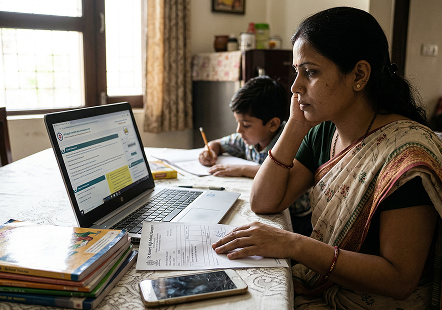
Widow Pension

Widow pension under the Indira Gandhi National Widow Pension Scheme (IGNWPS) is a landmark social security grant initiative run by the Ministry of Rural Development. Losing a spouse is one of the most difficult times a family can face, both, emotionally and financially. Especially if the other spouse lacks formal employment. To prevent families from plunging into severe economic distress, the central government provides guaranteed monthly financial assistance to affected widows across India. Operating under the broader National Social Assistance Programme (NSAP), this widow pension scheme assures that women from marginalised backgrounds can meet their basic needs with dignity. The scheme combines central and state government contributions to deliver this substantial relief.

Quick Facts: Widow Pension Scheme

Feature Details
Scheme Name Indira Gandhi National Widow Pension Scheme
Target Beneficiaries Destitute widows from BPL households
Age Criteria 40 to 79 years
Central Contribution ₹300 per month (State government adds matching funds)
Administering Body Ministry of Rural Development (under NSAP)
Payment Mode Direct Beneficiary Transfer (DBT) to bank or post office
Official Portal NSAP official website or UMANG App

How Does The Widow Pension Scheme Operate?

The Indira Gandhi National Widow Pension Scheme is a core pillar of the National Social Assistance Programme. Unlike the standard insurance products, this widow pension scheme does not require the beneficiaries to have previously paid any premiums. The initiative is entirely funded by the government.

Monthly Payout for the Widow Pension Beneficiaries

A common confusion about this widow pension scheme is the monthly pension amount that is disbursed. The scheme runs on a dual-contribution basis between the central and state governments.

  • Central Baseline: The central government provides a fixed contribution of ₹300 every month to marginalised widows between the ages of 40 to 79.
  • State Additions: State governments are strongly urged to match or exceed this amount as their part of the contribution. Hence, the final payout varies state-by-state, making the total monthly pension anywhere between ₹1,000 to ₹1,500.
  • Super Senior Citizen Upgrade: Once the beneficiary turns 80, they transition into a higher payout tier, and the central government's contribution automatically increases to ₹500 per month.

Widow Pension Eligibility

Because the IGNWPS is a highly targeted welfare initiative, the government strictly enforces eligibility rules. To qualify for a widow pension, the applicant must meet all the following conditions:

  • Marital Status: First and foremost, the applicant must be a widow.
  • Age Limit: The applicant must be between the age of 40 to 79 years to be eligible.
  • Financial Status: The applicant must belong to a household officially classified as Below Poverty Line (BPL) according to criteria prescribed by the Government of India.
  • Exclusions: The widow pension is immediately discontinued if the beneficiary remarries or the financial status of their family rises above the poverty line.

Documents Required for Widow Pension Application

Missing, illegible, or mismatched documentation is the primary reason applications face rejection. Before visiting your local welfare office or applying online via the UMANG app, you must gather clear copies of the following essential records:

  • Husband's Death Certificate: This is the most important document. For faster verification and processing, the certificate must explicitly mention the name of the surviving wife.
  • BPL Card or Listing Proof: A valid BPL ration card or an income certificate issued by a competent local authority is mandatory to officially prove the household's financial status.
  • Proof of Age: The government relies on a birth certificate, school leaving certificate, or Voter ID (EPIC). If you live in a rural area and lack these formal documents, you can obtain an official age certificate issued by a Medical Officer from any government hospital.
  • Aadhaar Card: Essential for biometric verification and to enable the Direct Benefit Transfer system for a smooth pension payout.
  • Bank Passbook: A clear photocopy of the first page of your bank passbook showing your account number, name, and IFSC code to ensure the funds are not disbursed to a dormant account.

How to Apply for the Widow Pension Scheme

Applying for the Indira Gandhi National Widow Pension Scheme can be done digitally via the government's unified mobile platform, or offline through traditional administrative channels. If you prefer in-person assistance, you can collect the official application form from your local Gram Panchayat, Block Development Office (BDO), or Municipal Corporation. Fill the form, attach the self-attested photocopies of your documents, and submit it to your local designated welfare authority for manual verification.

For a faster and hassle-free processing experience, you can apply directly from the UMANG platform using the following quick steps:

  1. Access the UMANG Platform: Download the UMANG App on your smartphone or open the web portal from a computer.
  2. Authenticate Your Identity: Login using your registered mobile number and complete the OTP verification process.
  3. Locate the NSAP Module: Use the search bar to find 'NSAP' (National Social Assistance Programme). Once the module opens, select the 'Apply Online' option.
  4. Fill the Application Form: Carefully enter your personal demographic details. You must also choose your preferred mode of payment (bank account or post office account) and input the correct banking credentials.
  5. Upload Required Documents: Upload a recent passport-sized photograph alongside scanned, readable copies of your mandatory documents, including the death certificate and BPL proof.
  6. Submit and Save Reference: Click 'Submit'. The portal will instantly generate an application reference number. Save this number securely, as it is required to perform your future widow pension status check.

How to Check Your Widow Pension Status Online

Once you are done with submitting your application, it undergoes a multi-step verification process by district welfare officers. You can easily track the status of this process online to ensure there are no roadblocks in the process.

  1. Visit the NSAP Portal: Open a web browser and search for the official NSAP website.
  2. Access the Report Section: On the main menu bar, click on the 'Reports' tab.
  3. Select the Application Tracker: Click on the link titled 'Pension Payment Details of Beneficiary' or the general 'Track Application Status' utility.
  4. Enter Your Details: Input your Application Sanction Number, Aadhaar Number, or Bank Account Number, along with the required on-screen captcha code.
  5. Check the Status: Click 'Submit'. The screen will display your exact widow pension status. It may show 'Sanctioned/Active' (funds approved), 'Pending Verification' (still under review), or 'Aadhaar Not Seeded' (requiring immediate banking correction).

Conclusion

The Indira Gandhi National Widow Pension Scheme is one of the most helpful financial lifeline for millions of vulnerable widows navigating the extremely difficult situations of bereavement and poverty. The NSAP ensures this financial aid reaches only the right hands by enabling strict BPL application guidelines and DBT process.

While the central contribution of ₹300 serves as a baseline, state-level additions often make this a substantial monthly support system. By diligently gathering the correct documentation, carefully submitting your application via UMANG or your Panchayat, and regularly executing a widow pension status check on the official portal, you can secure this guaranteed monthly payout and restore a measure of financial dignity and independence to your life.

FAQs

If a spouse is missing, Indian law requires an official FIR and a seven-year waiting period before a court declares legal death. Without an official death certificate or judicial decree, district welfare officers cannot process and approve an IGNWPS widow pension application.

An "Aadhaar Not Seeded" error means your identity details are not properly mapped to your bank account's Direct Benefit Transfer gateway. Visit your bank branch with your original identity card and passbook to complete NPCI mapping, ensuring uninterrupted monthly pension disbursements.

You cannot edit banking details directly on the public portal. To update an altered IFSC or closed account, submit a formal correction form alongside your updated bank passbook and Aadhaar to your local Gram Panchayat or Block Development Office for manual verification.

While the central IGNWPS scheme strictly requires beneficiaries to be at least 40 years old, several individual state governments run independent widow pension programmes or rehabilitation schemes that assist younger widows aged 18 to 39 using state treasury funds.

Upon the death of the registered widow, the monthly pension automatically terminates. Family members must immediately report the death to the local Block Development Office or Gram Panchayat with a valid death certificate to prevent fraudulent disbursements and administrative penalties.

No. Dual enrolment in multiple social security pension schemes is strictly prohibited. An applicant must not be receiving any other central or state social security pension benefits to remain eligible for the Indira Gandhi National Widow Pension Scheme.

faq-isolation

Explore more under Retirement Planing

Government Pension Schemes
Mukhyamantri Vridhjan Pension Yojana
Aasara Pension
Saral Pension Scheme
Pradhan Mantri Kisan Mandhan Yojana
Health vs Wealth
Long-Term Care Planning
How Long Will Money Last in Retirement?
Hidden Impact of Lifestyle Inflation
Inflation Protection in Health Insurance
Best Annuity Plans for NRIs
Inlfation Impact on Retirement Savings and Planning
Best Tax Saving Instruments for Smart Tax Planning
Invest Your Money for High-Interest Returns
Sukanya Samriddhi Yojana
Roth IRA
The Hidden Costs of Inflation
The Importance of Retirement Planning
Elabharthi Pension Portal
Aging Population in India
Long-Term Care in India
Term and Health Insurance Combo
Top Guaranteed Return Plan Options in India for a Secure 2026
Short-Term Investment Plans for 3 Months
5 Golden Rules for Retirement Planning
Control Inflation in an Economy
Cost Inflation Index
What Is Inflation?
Immediate Annuity Plan
Financial Regulators
Tax-Free Investment Options for NRIs
The Fixed Deposit Playbook
ULIP Pension Plan
Joint Family System Breakdown
Senior Citizen Savings Scheme
Income Tax Rules for Gratuity Exemption
Income Tax Slab for Senior Citizen
Tax-Smart Withdrawal Strategy
RNOR Status
FATCA and retired Indians
Manage Your Finances After Retirement
Life Expectancy Calculator
FIRE (Financial Independence, Retire Early)
Medical Inflation in India
Gig Economy & Second Careers
Section 44AB
Section 80C vs 80CCC vs 80CCD vs 80D
Atal Pension Yojana
Section 5 vs Section 6 of MWPA
Family Pension
Annuity Method of Goodwill
Deferred Annuity Meaning
Impact of inflation on Pension
Guaranteed Period Annuity
Profitable Business Ideas After Retirement
10 Common Retirement Investment Mistakes to Avoid
Single Premium Pension Plan
Post Office Monthly Income Scheme
Inheritance Tax
Hindu Undivided Family
Tax Benefits on Health Insurance for Pensioners
How Senior Citizens Can Save Tax Beyond 80C
Best Investment Plan for Monthly Income
How to Get 25k Pension Per Month?
1 Crore Retirement Plan
Swatantrata Sainik Samman Pension Scheme
A Complete Guide to Defence Pension
Madhu Babu Pension Yojana
Difference Between PIO and OCI
Passive Income Ideas After Retirement for Senior Citizens
Best Investment Options for Senior Citizens in 2026
Viklang Pension Yojana
The 80 20 Rule
How To Retire By 40?
Retirement Planning for Private Sector Employees
Beyond ESOPs
How to Manage Your Retirement Corpus Wealth
Maximising Your Retirement Planning & Options
Systematic Withdrawal Plans(SWP)
A Silent Retirement Crisis
Senior Citizen Community Living in India
Portfolio Diversification
Retirement Corpus Planning
Retirement Planning Under the Old & New Tax Regime
Why Thinking Beyond FDs Is Important?
Wealth Creation and Legacy Planning
article

calender-icon 21 Jul 2026

Government Pension Schemes

Government pension schemes that focus on post-retirement financial security...

article

calender-icon 20 Jul 2026

Mukhyamantri Vridhjan Pension Yojana

Mukhyamantri Vridhjan Pension Yojana is an important social security pension scheme launched by the ...

article

calender-icon 16 Jul 2026

Joy Bangla Pension

Joy Bangla Pension, also called Jai Bangla Pension Scheme, is a comprehensive social security initia...

article

calender-icon 16 Jul 2026

EPFO Vishwas Scheme

The EPFO Vishwas Scheme is a revolutionary one-time settlement initiative l...

article

calender-icon 15 Jul 2026

Aasara Pension

Aasara Pension is a comprehensive social welfare initiative introduced by t...

article

calender-icon 14 Jul 2026

Saral Pension Scheme

Saral Pension Scheme is a standardised immediate annuity product mandated b...